
Cadothy Amaze 5 Pro: Perhaps the Most Exciting TikTok Livestreaming Device of 2026
Anyone who has ever tried to go live on TikTok professionally knows the problem. At first, a smartphone is enough.
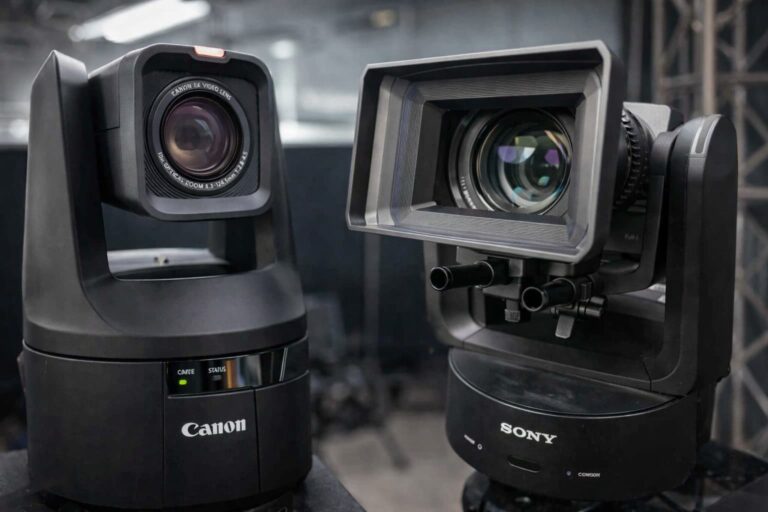
The requirements for professional streaming productions have changed fundamentally in recent years. Whereas static camera positions and a large crew used to be the norm, viewers now expect dynamic camera work and cinema-quality images, even for live events and corporate streams. In this environment, remote-controlled PTZ cameras have established themselves as indispensable tools that combine flexibility with technical excellence. PTZ stands for pan, tilt and zoom, i.e. remote-controlled panning, tilting and zooming. Two models stand out in the high-end segment: the Sony FR7 and the Canon CR-N500. Each camera represents a different approach in terms of design and objectives, making the decision between them a strategic choice.
The fundamental difference between the two professional streaming cameras is immediately apparent when looking at the image sensor. Sony has equipped the FR7 with a full-frame sensor that delivers the same image aesthetics familiar from cinematic productions. This sensor not only delivers exceptional performance in difficult lighting conditions, but also allows for that coveted shallow depth of field that makes people stand out from the background. In fact, Netflix has approved the FR7 for certain production formats: a certification that only a few cameras worldwide have received and which unmistakably underlines its quality. Canon, on the other hand, relies on a proven 1-inch sensor for the CR-N500, which has been valued in the broadcast industry for years for its reliability and detail. This approach prioritises consistently sharp imaging with a large depth of field, which is particularly advantageous for panels, conferences and multi-person setups where constant refocusing is not necessary.
The different sensors also fundamentally influence the low-light performance of both systems. The Sony FR7 excels in situations where other cameras would have long since given up – whether in atmospheric concert lighting, dramatically lit theatre productions or simply at corporate events in atmospheric settings. The larger sensor captures more light and produces an astonishingly clean image even at high ISO values. The Canon CR-N500 also delivers impressive results in low light, but shows the characteristic limitations of a smaller sensor. In well-lit studio environments or at outdoor events with sufficient natural light, this difference is hardly noticeable, but as soon as the lighting conditions become more challenging, the Sony pulls ahead.
Both manufacturers have recognised that modern PTZ cameras need to be more than just remote-controlled recording devices. Intelligent image tracking is now a crucial feature, and both Sony and Canon are integrating advanced auto-tracking functions. However, the implementation differs significantly in practice. The FR7 uses a sophisticated system that combines face recognition with motion tracking and operates particularly smoothly. This matches the cinematic feel of the overall system. The CR-N500 relies on Canon’s proven tracking technology, which is characterised by high reliability and precision, but prefers a more technical and objective image guidance. Canon’s approach works excellently for classic conference formats or church services where a speaker needs to remain reliably in the frame. For creative productions that require more ‘human’ and less mechanical camera work, Sony has the edge.
In terms of connectivity, both professional streaming cameras are on a par with each other and comprehensively meet the requirements of modern IP-based production workflows. Both support NDI as a forward-looking protocol that transports video, audio, control and tally via a single network cable – an invaluable advantage in complex multi-camera setups. In addition, both the Sony FR7 and the Canon CR-N500 offer a variety of classic interfaces such as SDI and HDMI, as well as extensive remote control options via various protocols. For AV teams that need to integrate existing infrastructures or implement hybrid setups, neither system presents any obstacles. The difference lies more in the software solutions provided and ecosystem integration, with Canon traditionally having stronger roots in the broadcast environment, while Sony is increasingly addressing creators and film productions.
The operating philosophy of both cameras reflects their respective origins. With the CR-N500, Canon has developed a PTZ camera that integrates seamlessly into established broadcast and AV workflows. The menu navigation follows proven conventions, and the user interface is functional and designed for efficiency. Technicians familiar with Canon equipment will find their way around immediately. The Sony FR7, on the other hand, brings a touch of cinema camera DNA with it. Its operating concept is more modern, offers more creative control over image parameters and specifically appeals to users who value visual freedom. That doesn’t mean the Sony is more complicated – it’s just different. For classic live production teams with a broadcast background, the Canon may be more intuitive, while DOPs and creative producers may find the Sony a more natural extension of their toolset.
In terms of price, both models are in the upper segment, with the Sony FR7 tending to represent the higher investment due to its full-frame technology and Netflix certification. However, these additional costs are not purely a premium fee, but reflect the expanded creative possibilities and image quality that the system offers. The Canon CR-N500 represents an excellent price-performance compromise for professional applications where reliability and proven broadcast quality are paramount. Both cameras are long-term investments that will pay for themselves over many years – provided you choose the model that suits your production style.
Ultimately, two clearly defined profiles emerge. The Sony FR7 is positioned as a creative A-camera for demanding streaming productions where image aesthetics and cinematic appeal are crucial. Anyone who produces high-quality concert streams, atmospheric corporate events or narrative formats and wants to achieve the visual quality of cinema films will find the FR7 an unrivalled tool. It really comes into its own in situations where light is scarce, emotions need to be conveyed and the audience expects premium imagery.
The Canon CR-N500, on the other hand, is the reliable camera for traditional live productions. It excels at conferences, panel discussions, church services, webinars and all formats where consistent sharpness, reliability and proven broadcast standards are required. For production teams who want to play it safe and need a system that does its job day in, day out without requiring constant adjustments, the CR-N500 is an excellent choice.
.The decision between these two professional streaming cameras should therefore depend primarily on your own production style and the requirements of your target audience. If you want to differentiate your streams visually and impress your audience with cinema-quality images, you won’t regret investing in the Sony FR7. On the other hand, if you value proven technology, easy integration and broadcasting excellence, the Canon CR-N500 is a sound choice. The experienced team at Livestream-Shop is of course available to provide individual advice and help you find the optimal PTZ camera for your specific production environment.
Would you like to stream flexibly without compromising on quality? Our technical experts will recommend the right PTZ solution for your setup. Contact us for a no-obligation consultation!
Anyone who has ever tried to go live on TikTok professionally knows the problem. At first, a smartphone is enough.
The red “on-air” light is on, your event is underway, and now the technology has to deliver. Yet many companies
Traditional online shops sell through product images, copy, and reviews. Live video shopping goes a step further: products are showcased
You are currently viewing a placeholder content from Vimeo. To access the actual content, click the button below. Please note that doing so will share data with third-party providers.
More InformationYou are currently viewing a placeholder content from YouTube. To access the actual content, click the button below. Please note that doing so will share data with third-party providers.
More InformationYou need to load content from reCAPTCHA to submit the form. Please note that doing so will share data with third-party providers.
More InformationYou are currently viewing a placeholder content from Vimeo. To access the actual content, click the button below. Please note that doing so will share data with third-party providers.
More InformationYou are currently viewing a placeholder content from YouTube. To access the actual content, click the button below. Please note that doing so will share data with third-party providers.
More InformationYou are currently viewing a placeholder content from Bunny Stream. To access the actual content, click the button below. Please note that doing so will share data with third-party providers.
More InformationYou are currently viewing a placeholder content from Wistia. To access the actual content, click the button below. Please note that doing so will share data with third-party providers.
More InformationYou are currently viewing a placeholder content from Facebook. To access the actual content, click the button below. Please note that doing so will share data with third-party providers.
More InformationYou need to load content from reCAPTCHA to submit the form. Please note that doing so will share data with third-party providers.
More InformationYou are currently viewing a placeholder content from Instagram. To access the actual content, click the button below. Please note that doing so will share data with third-party providers.
More InformationYou are currently viewing a placeholder content from X. To access the actual content, click the button below. Please note that doing so will share data with third-party providers.
More Information